Buying · 3 min read
Running a coco peat trial: samples, minimum orders and what to measure
A sample tells you whether a supplier can make the material. A pallet grown through a crop cycle tells you whether they can make it consistently and whether it suits your system. This guide sets out what to ask for at each stage and how to judge the result.
By SK Ceylon ·
Stage one: the sample
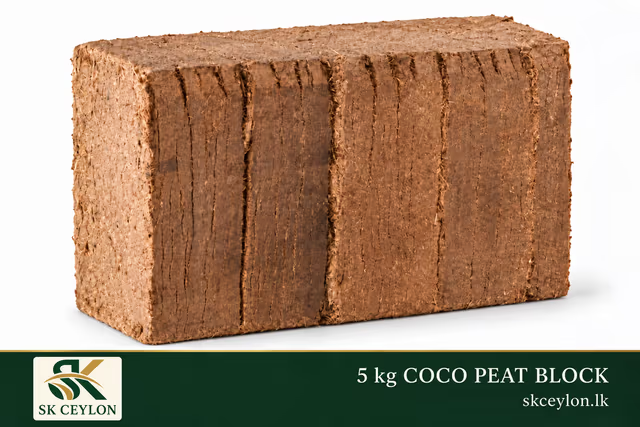
A sample is a small quantity of the actual product, usually 1 to 5 kg, sent by courier. Ask for the exact grade, blend and screen size you intend to buy, taken from current production rather than a sample stock, and for the lab report that goes with that batch. Courier cost for a small sample is modest and many exporters will send one without charge against a serious enquiry; a 5 kg block is heavier and the buyer is sometimes asked to cover the courier.
Test the sample with your own method. Hydrate a measured weight, record the expanded volume and the time it takes to wet, then measure EC and pH in the extract your laboratory or your meter uses. Compare the figures with the exporter’s report and note the method difference if there is one. Look at the material: fines, fibre, chips, any sand at the bottom of the container, any smell of fermentation. A sample cannot tell you how consistent production is or how the material behaves over a crop cycle, but it rules out suppliers whose product does not match their specification at all.
Stage two: a trial quantity
| Quantity | How it ships | Suits |
|---|---|---|
| 1 – 5 kg | Courier | Laboratory and bench testing of the grade |
| 1 – 3 pallets | LCL (less than container load) sea freight, shared container | A crop trial in part of a greenhouse or a nursery block over one cycle |
| A 20 ft container | FCL, where the line offers 20 ft for this cargo | A larger trial or a small grower’s season; less economical per block than 40 ft |
| A 40 ft high-cube container | FCL | The normal commercial unit and the basis of most quotations |
LCL freight is priced per cubic metre and the fixed charges at origin and destination are significant, so a pallet of coco peat costs much more per block than the same block in a full container. Treat the trial price as the cost of information, not as the price you will pay later. Ask the exporter to quote the trial and the first container at the same time, so you can see both figures.
What to measure during the trial
- On arrival: unit count and weight, block dimensions, condition of wrapping and pallets, moisture of a sample, and EC and pH of a hydrated sample from at least three units.
- At hydration: litres obtained per kilogram, time to full wetting, and whether any dry cores remain in blocks hydrated to your normal routine.
- In the system: drainage and run-off EC over the first two weeks, which shows whether salts are leaching and whether the material was properly washed or buffered.
- Crop performance: root development, uniformity and yield or quality against your current substrate in the same house, with the same feed and irrigation. Keep the comparison fair; a trial in a different house with a different schedule proves nothing.
- Handling: how the format fits your filling, planting and disposal routine, and whether the packing survived transport and storage.
Agreeing the outcome in advance
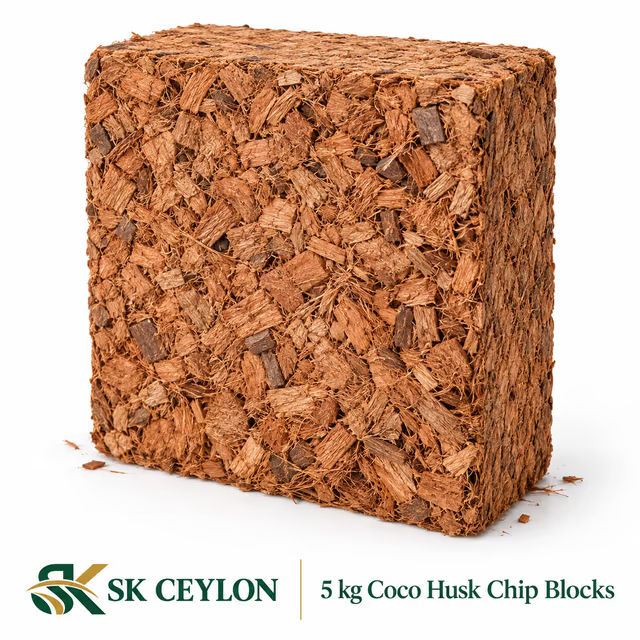
Before the trial ships, write down what it has to show for the first container to follow: the EC and pH limits, the minimum expansion, the acceptable run-off EC profile, and the crop comparison you will make. Share it with the exporter. This turns the trial from a vague impression into a decision, and it gives the exporter a clear target. If the trial falls short on one point, the specification can often be adjusted, for example a different peat to chip ratio or a buffered grade, and a second trial pallet is cheaper than a wrong container.
Minimum order quantities
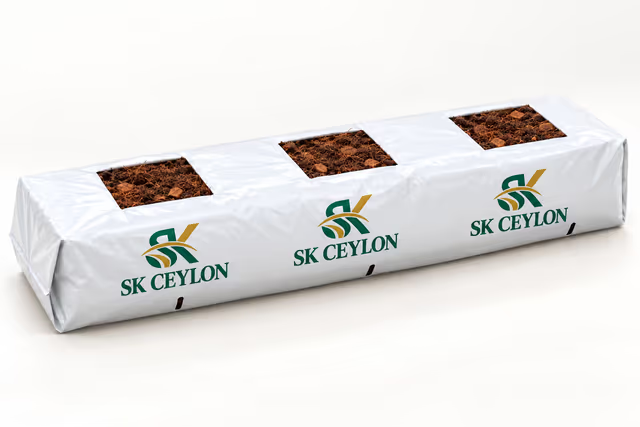
Most Sri Lankan exporters quote per 40 ft high-cube container and state a minimum per product, because the press, washing and packing lines are set up per run. Some products carry a higher minimum than others: printed grow bag film, custom block sizes and buffered material need a production run of their own, while standard 5 kg blocks can be combined with other products in a mixed container. Ask for the minimum per product and whether mixed containers are possible before you plan the trial, so that the first commercial order is realistic.