Buying · 3 min read
What drives the price of coco peat, and how to compare quotations
Two quotations for ‘5 kg coco peat blocks’ can differ by half and both be fair. The difference is almost always in the specification, the packing and what the price includes. This guide explains what moves the number.
By SK Ceylon ·
Grade: unwashed, washed or buffered
Unwashed coco peat is the base material, compressed as it comes from the mill. Washing it to a low-EC specification takes fresh water, time and drying capacity, and a share of the material is lost in the process, so washed material costs more. Buffering adds a calcium nitrate soak and a second rinse, with the chemical and the extra handling on top. A buffered grade can cost noticeably more than an unwashed one for the same block, and a quotation that does not state the grade and the EC limit cannot be compared with one that does.
Moisture and expansion
A price per ton is a price for water as much as for pith unless the moisture is fixed. Material shipped at 25 % moisture carries a quarter of its weight as water; material at 15 % carries far less. Always compare quotes at the same stated maximum moisture, or ask for the price on a dry-weight basis.
Expansion matters for the same reason. A block that expands to 60 litres gives you more substrate than one that expands to 50, and the difference comes from the fibre and pith ratio, the particle size and the compression. The fair comparison is the delivered cost per cubic metre of usable substrate after hydration, which is what your mixing line or your grow bags actually consume.
Particle size and fibre content
Sieved grades with a controlled particle size, or with fibre removed for propagation plugs, cost more than the mill's standard output. Chip blocks, where the husk is cut rather than milled, are a different product again. If your application tolerates a wider particle range, say so; it is the cheapest specification to meet.
Packing and presentation
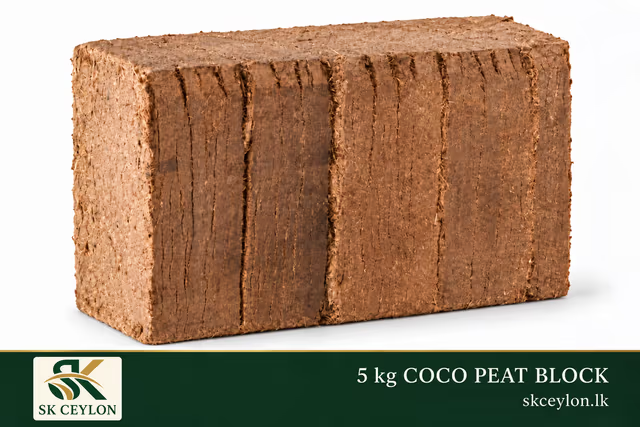
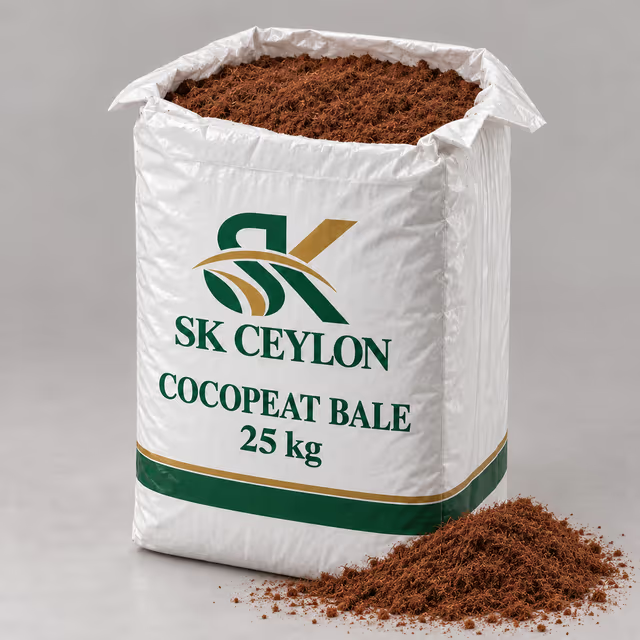
- Loose-loaded blocks are the cheapest to ship and the most expensive to unload. Pallets add cost at origin and save it at the destination.
- Individually shrink-wrapped blocks with a printed label cost more than bulk-wrapped pallets of unprinted blocks, and are only worth it for retail.
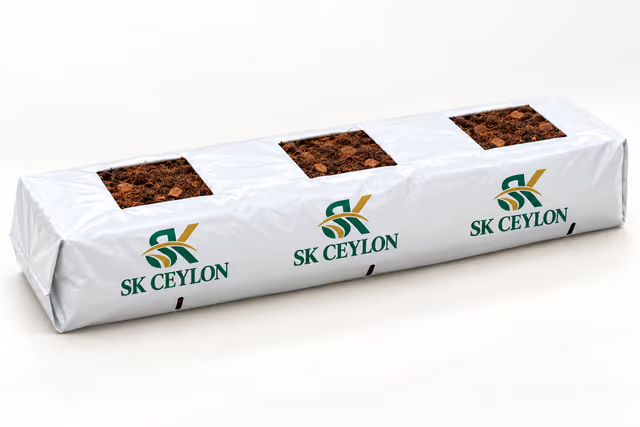
- Printed grow bag film, custom hole patterns and drip-hole placement add tooling and set-up cost that is spread over the order, so the per-slab premium falls with volume.
- Custom block and bale dimensions change the loading pattern and often reduce the count per container, which raises the freight share per unit.
Freight and Incoterms
Sea freight from Colombo varies by route, by season and by the state of the container market, and it can be a large share of the landed cost for a low-value, high-volume product. A FOB price excludes it; a CIF or DAP price includes it. When you compare a FOB quote with a CIF quote, add your own freight, insurance and destination charges to the FOB figure first. Container utilisation matters too: a product that loads 5,120 units loose against 4,800 on pallets spreads the same freight over more units.
Season and supply
Demand for coco peat peaks from January to April as growers in the northern hemisphere prepare for spring, and prices and lead times rise with it. On the supply side, the south-west monsoon from May to September slows drying at the mills in Sri Lanka, which tightens the availability of low-moisture washed material. Buyers who can confirm volume for the year and take delivery in the quieter months generally secure better pricing than those buying spot in the peak.
Testing and documentation
An independent lab report, product samples before confirmation and a written specification add a small cost to the exporter and remove most of the risk for the buyer. A quotation that includes them is rarely the cheapest on paper, but a container of the wrong EC costs far more than the testing would have.
How to compare quotations
- 01Put every quote on the same Incoterm. Add freight, insurance and destination charges to FOB prices.
- 02Check the grade, the EC limit and its test method, and the maximum moisture are the same. If not, ask each supplier to requote to one specification.
- 03Convert to cost per expanded cubic metre using each supplier's stated expansion, not a nominal figure.
- 04Add the cost of unloading: labour for loose cargo, or the pallet surcharge.
- 05Note what documentation and testing is included, and the lead time.