Shipping · 2 min read
How many coco peat blocks or grow bags fit in a 40 ft container?
The container is the unit most buyers price in. These are the standard loading figures for SK Ceylon products, and the factors that make a real shipment differ from them.
By SK Ceylon ·
Standard loading figures
| Product | Per pallet | Per 40 ft HC |
|---|---|---|
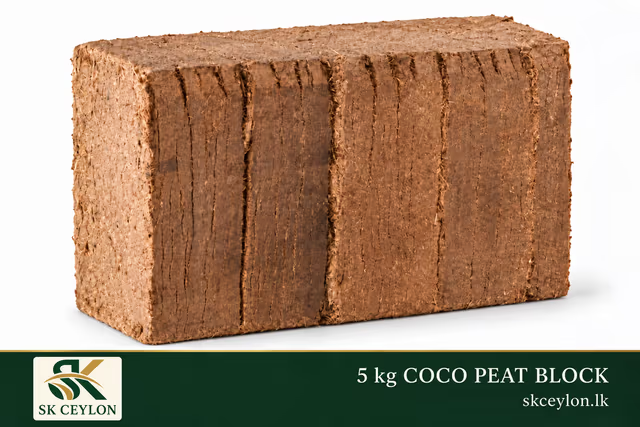
| 5 kg coco peat blocks, palletized | 240 blocks | 4,800 blocks (20 pallets) |
| 5 kg coco peat blocks, loose-loaded | — | 5,120 blocks |
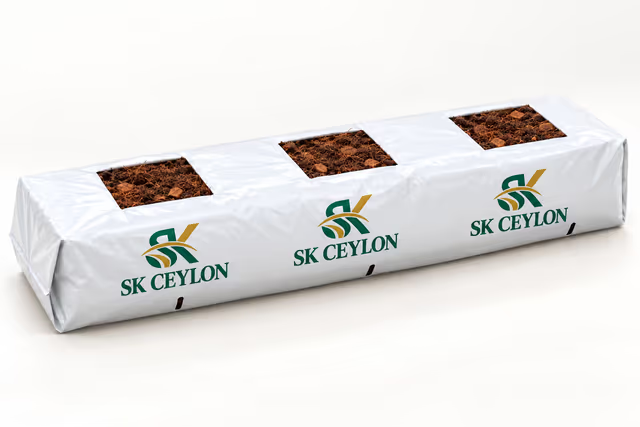
| Coco grow bags, 100 × 18 × 14 cm | 450 slabs | 9,000 slabs (20 pallets) |
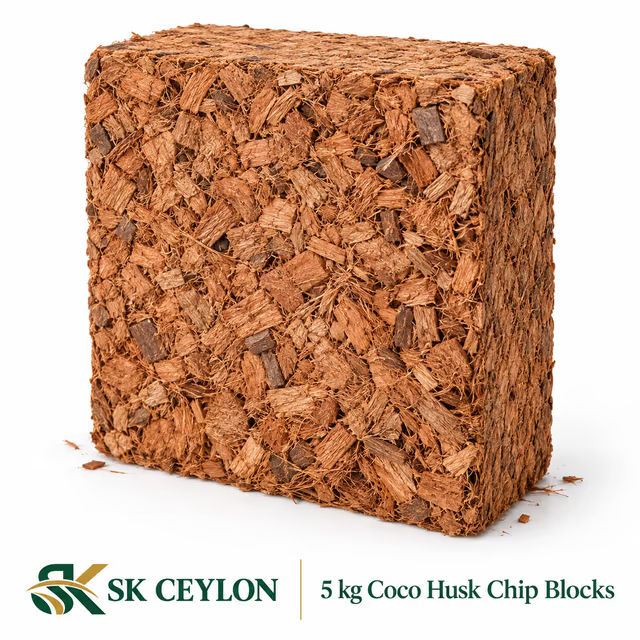
| 5 kg coco chip blocks | 420 blocks (LCL pallet) | Quoted per order |
| 25 kg coco peat bales | Per bale dimensions | Quoted per order |
| Coco peat discs | Per carton size | Quoted per order |
| Coir fibre bales | — | Per bale weight and count |
These are the figures for standard sizes and a standard pallet pattern. Every quotation includes a loading plan with the exact count for the order.
Palletized or loose-loaded?
Loose loading fits more product because there is no pallet taking up space: 5,120 blocks against 4,800. The trade-off is at the destination. Loose blocks are unloaded by hand, which takes labour and time at the warehouse, while pallets come off with a forklift in under an hour.
Buyers with a forklift and a tight unloading window usually choose pallets. Buyers moving the product straight into a mixing line, or with cheap labour at the receiving end, often choose loose. Both are standard, and the choice is yours.
What changes the count
- Destination weight limits. A 40 ft high-cube is rated for a far heavier payload than most roads allow. Many countries cap the gross weight of a loaded container on the road, and the shipping line or trucker will apply that cap, so the shipment is often weight-limited before it is space-limited. The loading plan is built around the destination's limit.
- Pallet configuration. Pallet size, stacking height and whether a pallet can be double-stacked all change how many units fit.
- Product dimensions. Custom block or slab sizes, and bales and cartons whose size is set per order, change the pattern entirely.
- Moisture. Compressed products are shipped at low moisture, under 20 %, partly so that weight stays predictable.
Trial orders and LCL
You do not need to commit to a container to test the material. Single pallets ship as less-than-container-load (LCL) consignments. Trial pallets are available for grow bags, and chip blocks ship as 420-block LCL pallets. The cost per unit is higher than a full container, but it lets you run the product on your own crop before scaling up.
What to send for an accurate loading plan
- 01The product and size, or your own specification.
- 02The destination port and, if known, the inland delivery point. Road limits differ by country.
- 03Whether you can unload loose cargo, or need pallets.
- 04Monthly or annual volume, so the plan can be repeated.