Specifications · 3 min read
Coco peat EC and pH explained: how to read a specification
Two numbers decide whether a batch of coco peat will perform: its electrical conductivity and its pH. Both are easy to measure and easy to misread.
By SK Ceylon ·
What EC measures
Electrical conductivity is a measure of the dissolved salts in a solution. Water conducts electricity better the more ions it carries, so a sample of coco peat is mixed with pure water, the water is tested, and the reading stands in for the salt content of the material. The unit is millisiemens per centimetre (mS/cm), which is the same as decisiemens per metre (dS/m).
For coco peat the salts of concern are sodium and chloride from the husk, and potassium, which is harmless in small amounts but can unbalance a feed recipe in larger ones. A high EC means the roots are competing with salt for water, and the symptoms look like drought even when the substrate is wet.
Why the test method matters
The reading depends on how much water is used to extract the salts. Three methods are common. In the 1:5 v/v method, one part of coco peat is shaken with five parts of water. In the 1:1.5 v/v method, one part is mixed with one and a half parts of water, so the extract is more concentrated and reads higher for the same material. In the saturated media extract (SME) method, the sample is wetted only to saturation and the solution is drawn off, which gives a higher reading still.
Because of this, a limit such as 'EC under 0.5' is meaningless without its method. SK Ceylon publishes its figures at 1:5 v/v. If your laboratory or your buyer uses a different method, agree the equivalent limit before the order, rather than comparing numbers from different methods afterwards.
| Method | Coco peat : water | Typical reading for the same sample |
|---|---|---|
| 1:5 v/v | 1 : 5 by volume | Lowest |
| 1:1.5 v/v | 1 : 1.5 by volume | Higher |
| Saturated media extract (SME) | Wetted to saturation | Highest |
| Pour-through | Drainage from a watered pot | Varies with feed; used in-crop, not for specifying raw material |
pH, and why coco peat rarely needs liming
pH describes how acidic or alkaline the substrate solution is, and it controls which nutrients stay available to the roots. Most crops do best between about 5.5 and 6.5. Coco peat sits naturally in that range, which is one of its practical advantages over sphagnum peat, which is strongly acidic and normally needs lime before use.
Two things shift the pH in use: the irrigation water, especially hard or alkaline water, and the fertiliser. A substrate specification only tells you the starting point. From the first irrigation, water quality and feed recipe take over.
Moisture content
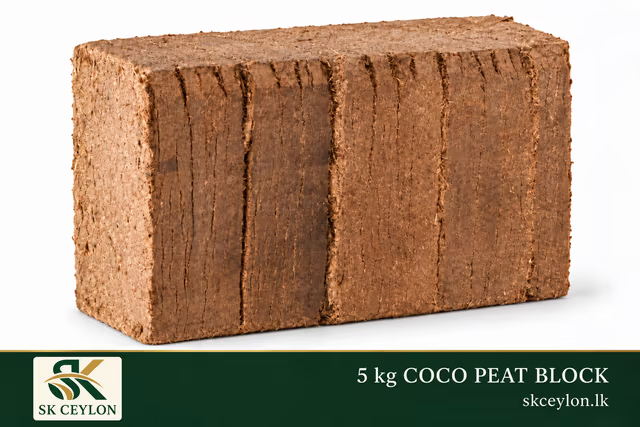
Compressed coco peat is shipped partly dried, typically under 20 % moisture at dispatch. Lower moisture means more product per tonne of freight, blocks that hold their shape in handling, and less risk of mould in transit. It also means the material needs rehydrating before use; a 5 kg block takes up far more than its own weight in water.
Reading a supplier's specification
- 01Find the EC figure and check that a method is stated next to it. If not, ask.
- 02Check the pH range. Anything inside 5.5 to 6.8 is normal for coco peat.
- 03Check moisture at dispatch and whether a maximum is stated.
- 04Look for the grade: washed, unwashed or buffered. An EC limit implies washing, but say so explicitly.
- 05Ask for an independent laboratory report and a physical sample before confirming a container. The sample lets you run your own test by your own method.