Using the product · 2 min read
How to hydrate and use a 5 kg coco peat block
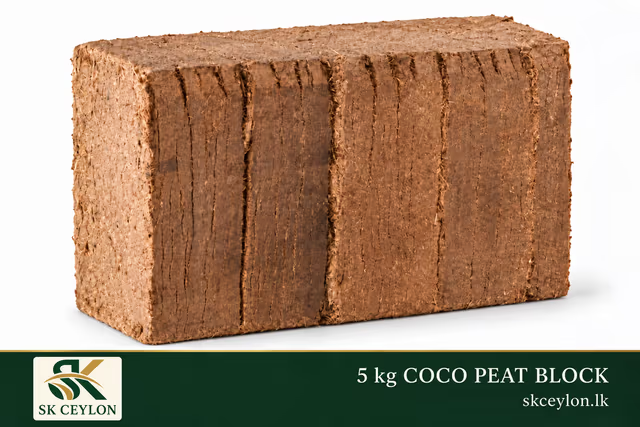
A compressed block is a dry, dense brick until it meets water. Hydrating it properly takes a few minutes and decides how the substrate behaves for the rest of the crop.
By SK Ceylon ·
What you need
- A container or clean floor area with drainage. A 5 kg block becomes 60 litres or more, so allow space.
- Clean water. Use the same water you will irrigate with, so the substrate starts at the pH and EC the crop will see.
- A fork or rake to break up the block, and a wheelbarrow or mixer if you are blending.
Step by step
- 01Place the block in the container or on the floor. If the block was shrink-wrapped, remove the wrap.
- 02Add water gradually. A 5 kg block typically takes around 15 to 20 litres, roughly 3 to 4 litres per kilogram. Pour a third, wait a few minutes for it to soak in, then add more.
- 03Let the block swell. Compressed coir takes up water from the outside in; the core takes longest. Give it 15 to 30 minutes.
- 04Break it up. Use a fork to pull the swollen layers apart, working from the edges to the core, until no dry lumps remain. Add a little more water if the core is still dry.
- 05Let excess water drain. The expanded substrate should be moist throughout, not waterlogged.
- 06Mix or plant. Blend with chips, perlite or other ingredients if your recipe calls for it, or fill pots and trays directly.
How much substrate you get
SK Ceylon's 5 kg blocks expand to a minimum of 12 litres per kilogram, so 60 litres or more per block, with higher-purity grades reaching 15 to 18 litres per kilogram. For planning, count 60 litres per block and treat anything above that as a bonus. A 4,800-block container is therefore at least 288,000 litres of growing medium.
Before planting
If you ordered washed low-EC material, the substrate is ready to use. If the crop is salt-sensitive or you want to check the batch, test the EC of the first drainage; it should sit close to the EC of the water you added. If you ordered washed but not buffered material and are growing a fruiting crop on drip, run a pre-plant drench with calcium nitrate solution and drain it, which does what buffering does at the mill.
Unwashed material needs rinsing until the drainage EC falls to your target before any crop goes in. This takes a lot of water, which is why most growers order washed material in the first place.
Storing blocks
- Keep compressed blocks dry. Damp blocks start to swell and can grow mould.
- Store on pallets or shelving, off a bare floor, and under cover out of direct sun.
- Once expanded, use the substrate within a few days or keep it covered and moist; it is a natural material and will dry out or start to break down if left open.