Choosing a grade · 3 min read
Washed, unwashed or buffered coco peat: which should you order?
Coco peat leaves the husk carrying salts. Whether those salts are rinsed out, and whether the material is treated to stop it holding back calcium, decides which crops it suits.
By SK Ceylon ·
Where the salt comes from
Coco peat is the pith left after fibre is extracted from coconut husk. Coconut palms grow near the coast and take up sodium, potassium and chloride, which end up in the husk. Fresh pith therefore has a high electrical conductivity (EC), and if it is used straight away the salts compete with the crop for water and nutrients.
The second issue is less obvious. Pith has a high cation exchange capacity, and its exchange sites arrive loaded with sodium and potassium. When a grower feeds calcium and magnesium, the pith swaps those for its sodium and potassium during the first weeks, so the crop sees less calcium than the feed recipe intends. Washing deals with the first problem; buffering deals with the second.
Unwashed coco peat
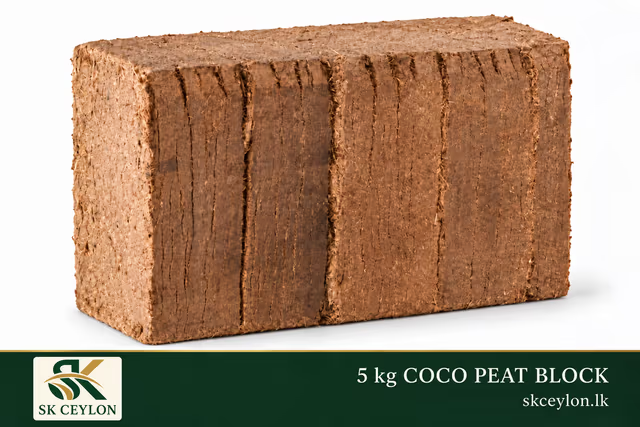
Unwashed material is compressed as it comes from the mill, with its natural EC. It is the cheapest grade and ships the same way as washed material. It suits uses where salt is not critical: soil amendment, landscaping, mulch and animal bedding. Substrate producers who have their own washing line also buy unwashed and process it themselves.
It is a poor choice for seedlings, salt-sensitive crops and any container growing where the roots have nowhere else to go.
Washed low-EC coco peat
Washing means rinsing the pith with fresh water at the mill, before compression, until soluble salts fall below an agreed limit. The common horticultural specification is an EC under 0.5 mS/cm measured at 1:5 v/v. This is the grade to order for nursery and potting mixes, container growing and hydroponic blends where the crop will be fed a complete nutrient solution.
Washing must happen at source. A mill without fresh-water washing capability cannot produce reliable low-EC material by blending, which is why SK Ceylon buys only from mills that have it.
Buffered coco peat
Buffering starts with washed material and adds a soak in calcium nitrate solution, followed by a further rinse. The calcium displaces the sodium and potassium held on the exchange sites, so the pith no longer strips calcium out of the feed. The result is a substrate that behaves predictably from the first irrigation.
Buffered coco peat matters most for fruiting crops on drip, such as tomato, cucumber, pepper and strawberry, where calcium supply in the early weeks affects fruit quality, and for any crop planted straight into the substrate without a conditioning period. Growers who run a pre-plant calcium drench themselves can order washed material instead.
| Use | Grade to order | Why |
|---|---|---|
| Soil amendment, landscaping, mulch | Unwashed (high-EC) | Salt is diluted in soil; cost matters more than EC |
| Animal bedding | Unwashed (high-EC) | Absorbency, not salinity, is the requirement |
| Nursery and potting mixes | Washed low-EC | Young plants are salt-sensitive |
| Container growing, hydroponic blends | Washed low-EC | Roots are confined; salts cannot leach away |
| Tomato, cucumber, pepper, strawberry on drip | Buffered | Early calcium supply affects yield and fruit quality |
| Seed starting and propagation | Washed low-EC, fine grade | Seedlings tolerate the least salt |
How to specify it on an order
- State the grade: unwashed, washed or buffered.
- State the EC limit and the test method together, for example under 0.5 mS/cm at 1:5 v/v. The same material reads differently under different methods, so a limit on its own cannot be verified.
- State the pH range you need. Coco peat is naturally 5.5 to 6.5 and rarely needs adjusting.
- State the maximum moisture at dispatch. Under 20 % is usual for compressed products.
- Ask for a sample and an independent lab report before confirming a container, so you can check the numbers against your own method.