Choosing a grade · 3 min read
Coir fibre grades explained: bristle, mattress and mixed fibre
Coir fibre is sold by grade, and the grade decides what a manufacturer can make from it. This guide covers the grades produced in Sri Lanka, their uses and the figures to fix on an order.
By SK Ceylon ·
Brown coir and white coir
Coir is the fibre from the husk that surrounds the coconut shell. Husks from mature, brown coconuts give brown coir: thick, strong fibre with a high lignin content, which is what most industrial buyers want. Husks from green coconuts, harvested before they ripen and soaked for months in water, give white coir: finer, paler and more flexible, used for spinning fine yarn and weaving mats. Sri Lanka's export trade is mainly in brown fibre, and that is what this guide covers.
The three grades
| Grade | What it is | Typical uses |
|---|---|---|
| Bristle fibre | The longest, stiffest fibres, combed out and sold in bundles or bales | Brushes and brooms, ropes and twine, doormats, upholstery stuffing |
| Mattress fibre | The shorter, curly fibre left after the bristle is combed out | Mattresses and bedding, rubberised coir sheets for seats and upholstery, erosion-control blankets, pots and liners |
| Mixed fibre | Bristle and mattress fibre together, as decorticated, with no combing | Erosion control, geotextiles, mulch mats, filter media, applications that tolerate a range of lengths |
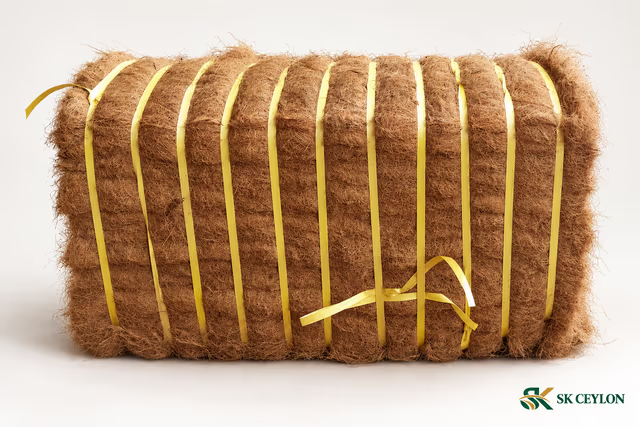
Mattress fibre is the largest volume grade in the export trade, and the one most often compressed into bales. Bristle fibre is sold in smaller quantities to specialist buyers. Mixed fibre is the cheapest and suits any process that cuts or needles the fibre anyway.
How the fibre is made
Husks are either retted, meaning soaked in water for weeks so that the pith softens and separates, or mechanically decorticated, where a machine beats the dry husk apart. Decortication is faster and now the usual route for brown fibre; retting gives a softer, cleaner fibre and is still used for the finer grades. After separation the fibre is cleaned of pith and dust, dried, combed into bristle and mattress fractions if the order calls for it, and compressed into bales.
What to specify
- Grade: bristle, mattress or mixed, and whether the fibre should be combed or decorticated.
- Fibre length: the range you can process, since each grade spans a range and the mill can sort to it.
- Colour: golden brown to dark brown, confirmed against a sample. Colour reflects the husk maturity and the processing, and matters most for visible products such as mats.
- Moisture: a maximum at dispatch, with the test method stated. Fibre shipped too wet can heat and discolour in the container.
- Impurity and pith content: a maximum percentage of pith, dust and short fibre, measured on an agreed basis. This is the figure that most affects a mattress or rubberising line.
- Bale weight and dimensions: the net weight with a tolerance, and the size that suits your handling and the container loading.
- Strapping and wrapping: plastic or metal straps, and whether bales are wrapped, depending on the voyage and the destination's import rules.
Packing and shipping
Fibre is compressed into bales because loose fibre is almost all air. The bale weight sets how much fits in a container and how it is handled at your end, so it is agreed per order rather than fixed. Every shipment carries a Coconut Development Authority export permit and a phytosanitary certificate, with fumigation where the destination requires it. Terms are FOB Colombo, or CIF and DAP on request, and the bale count and net weight per container are stated in the quotation.