Grow bags · 2 min read
Choosing a grow bag blend ratio by crop
A grow bag's blend sets the balance between water it holds and air it keeps around the roots. The right ratio depends on the crop, the irrigation strategy and the climate.
By SK Ceylon ·
What the ratio does
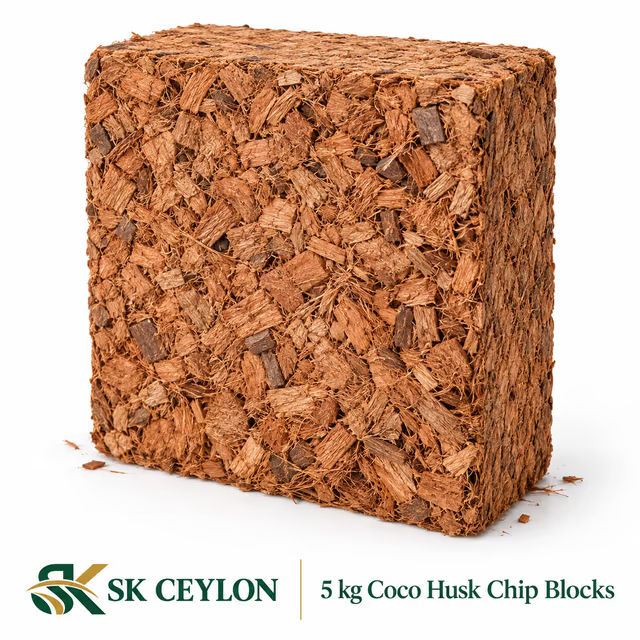
Coir peat is the fine fraction of the husk. It holds water well, with a high water-holding capacity, and rewets easily after drying. Husk chips are the coarse fraction, cut to 6 to 7 mm for grow bags. They create large pores that drain freely and stay filled with air. Blending the two sets the air-to-water balance of the slab.
A peat-heavy blend buffers the crop against missed irrigations and suits cooler, duller conditions where water demand is low. A chip-heavy blend needs more frequent irrigation but keeps roots oxygenated in warm conditions and under high-frequency drip, where a wetter slab would suffocate them.
| Peat : chips | Character | Typically used for |
|---|---|---|
| 100 : 0 | Highest water-holding capacity | Soilless mixes, seed starting, container growing |
| 80 : 20 | High moisture retention with moderate aeration | Strawberry, leafy crops, cooler climates |
| 70 : 30 | Balanced water retention and aeration | The common horticultural blend for greenhouse vegetables |
| 60 : 40 | Free draining with good water-holding; the standard grow bag mix | Tomato, cucumber, pepper, eggplant, cut flowers |
| 50 : 50 | Improved drainage and air porosity | Crops needing strong root oxygenation; warm climates and high-frequency irrigation |
Starting points by crop
- Tomato, cucumber, pepper and eggplant: 60:40 to 70:30. High-wire vegetables on drip want free drainage with enough reserve to carry the plant between irrigations.
- Strawberry on gutters or tabletops: 50:50 to 60:40 in warm regions and under frequent fertigation; 80:20 where the climate is cooler and irrigation less frequent.
- Roses and gerbera: 50:50 to 60:40. Cut-flower crops run for several years on one slab, so the structure has to resist compaction over time, which favours chips.
- Melon and other heavy-fruiting vines: 60:40 to 70:30. High water demand at fruit set argues for more peat.
- Leafy crops and herbs: 80:20. Short cycles and steady moisture matter more than aeration.
These are starting points. Growers with experience on a given slab often fine-tune the ratio against their own irrigation regime, and SK Ceylon presses any ratio to order.
Irrigation and climate come first
Two growers with the same crop can need different blends. A grower in a hot climate running drip pulses every twenty minutes needs air in the slab more than water, so a 50:50 blend keeps roots healthy. A grower in a cool, cloudy region irrigating a few times a day needs the slab to hold water between pulses, so 70:30 or 80:20 is safer. Tell your supplier the irrigation frequency and the climate, not just the crop.
Beyond the ratio
- Buffering. For fruiting crops on drip, ask for buffered substrate so the slab does not hold back calcium in the first weeks.
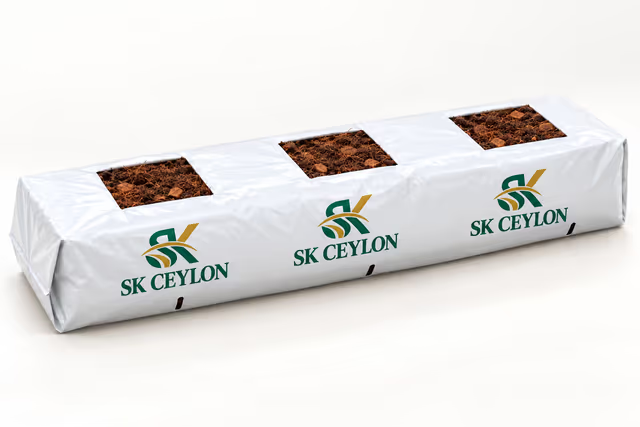
- Hole pattern. Planting holes and drain cuts are made at the factory; match the hole count and spacing to your planting density and drip layout.
- Slab size. The standard bag expands to 100 × 18 × 14 cm, about 25 litres. Other sizes are produced against order.