Using the product · 3 min read
How to store coco peat: shelf life, moisture, mould and stacking
Dry, compressed coco peat does not expire in any useful sense; stock that has been kept dry for years hydrates and performs as it did when it was pressed. What shortens its life is water. This guide covers how to keep it out, and what to do with stock that has been wet.
By SK Ceylon ·
Does coco peat expire?
Coco peat is lignocellulosic material that has already been through its most active decomposition in the husk pile and the washing beds. Once dried to below about 20 % moisture and compressed, biological activity is very low, and the material does not degrade in the way compost or bark does. Blocks stored dry for several years hydrate normally, with the same EC, pH and expansion as fresh stock. There is therefore no manufacturer’s expiry date; what you are managing is moisture, not time.
What goes wrong when it gets wet
- Swelling and loss of compression. A block that takes on water begins to expand in its wrapping, splits the film and no longer stacks or counts as a compressed unit. Grow bags swell inside the film and may burst at the seams.
- Surface mould. White or grey mould on the face of a damp block is a saprophytic growth on the surface and is cosmetic; it brushes off once the block is hydrated and usually does no harm to crops. It is a sign that storage is too damp, not that the block is spoiled.
- Fermentation and odour. Material that stays wet and warm for weeks can ferment anaerobically, which produces a sour smell and can lower pH and raise EC. Such stock should be hydrated, flushed and tested before any horticultural use, and is better directed to soil amendment.
- Weight gain. Wet stock weighs more, so batches sold by weight are short on dry matter, and pallets can exceed rack or vehicle limits.
How to store it
| Product | Store | Avoid |
|---|---|---|
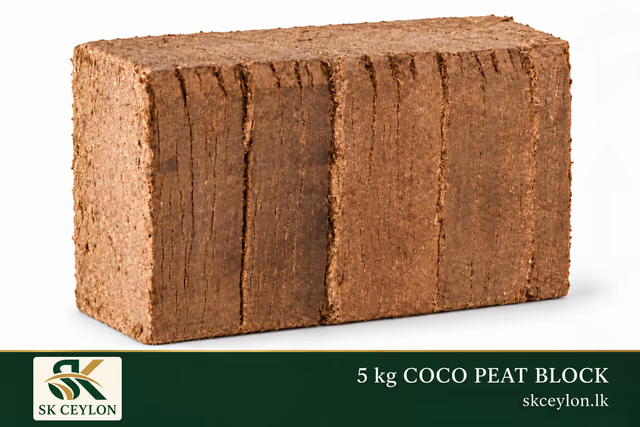
| 5 kg blocks, palletized and shrink-wrapped | On the pallet, under cover, on a dry floor, stacked to the height the pallet was built for | Standing water, direct rain, stacking loose blocks higher than about 1.5 m without a pallet |
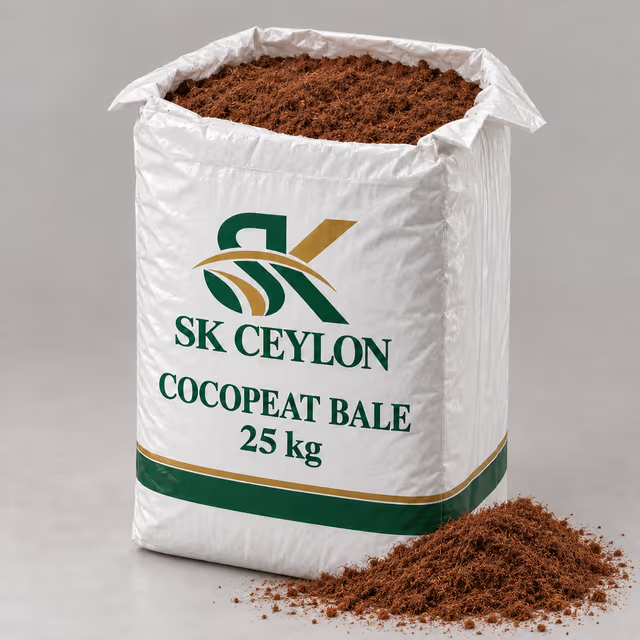
| 25 kg bales | Under cover on pallets or dunnage; keep strapping intact | Cutting straps before use; outdoor storage without a cover |
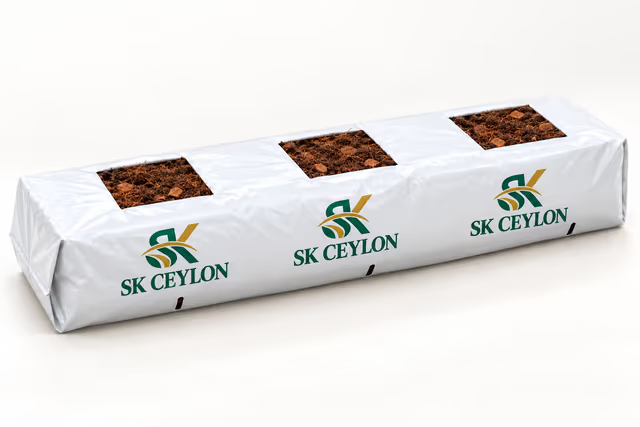
| Grow bags and slabs | Flat, in cartons or on pallets, out of sunlight to protect the film | Sunlight on unprinted film for long periods, which weakens it before the crop; stacking so high that bottom bags deform |
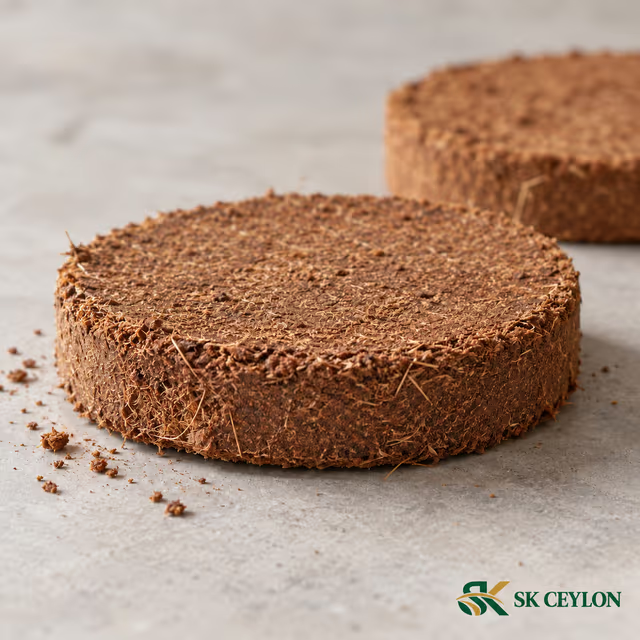
| Discs and plugs | In the original cartons, dry and sealed | Humidity, which makes discs swell and lose shape before use |
| Loose or opened material | In sealed bags or covered bins, used within the season | Open piles outdoors, which take up rain and weed seed |
A dry, roofed warehouse or shed with a concrete floor is ideal. Keep pallets off the floor and a little away from the walls so that condensation and splash cannot reach them. If stock has to wait outside, put it on pallets on hard standing, cover it with a waterproof tarpaulin that is open at the base so air can move underneath, and bring it inside as soon as possible. Containers left standing in the sun develop condensation inside; unload them promptly rather than using them as storage.
Moisture in transit
Sea containers travel through temperature swings that cause condensation, which is why exporters dry material to below about 20 % moisture before compression and wrap pallets tightly. On arrival, check the top layer of the first pallets you open for damp or mould; if the container has been through heavy rain at the port and the roof has leaked, the damage is usually visible on the top tier only. Photograph anything you find, note the seal and container number, and tell the exporter and your insurer promptly.
Stock rotation and re-testing
Keep the batch number and the lab report with each delivery, and use the oldest stock first. Before using stock that has been stored for more than a season in a sensitive crop such as propagation or a fruiting crop on drip, hydrate a sample from a few blocks and check EC, pH and expansion against the original report. If the figures match, the stock is fine. If EC has risen or the material smells sour, it has been wet at some point, and should be flushed or used for a less sensitive purpose.